


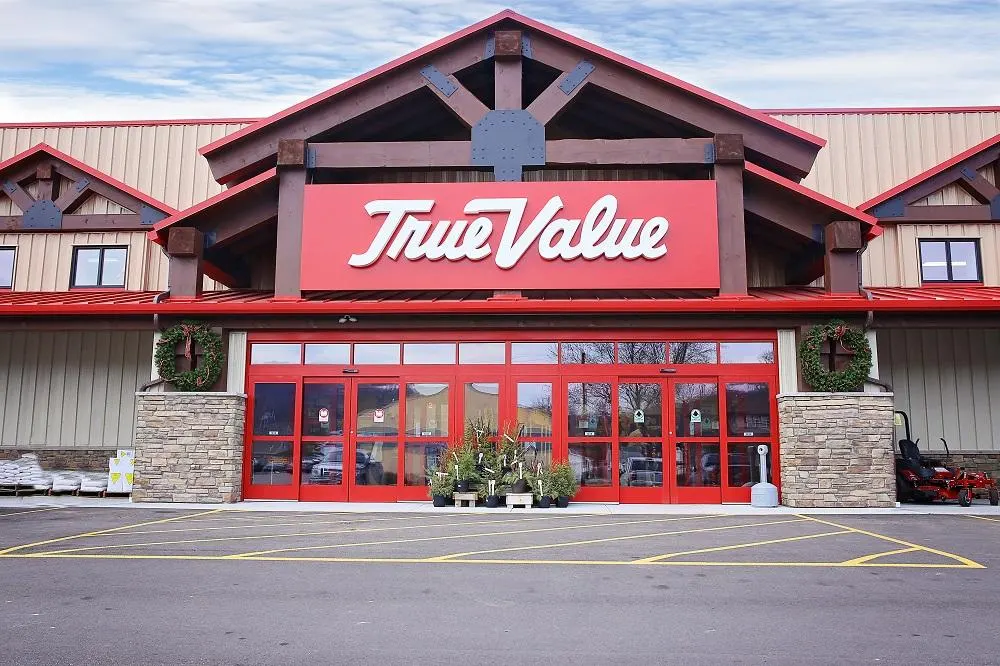
Quick answer: Before asking True Value for a refund, find out who took your payment. True Value’s network includes independently owned and operated hardware stores, as well as orders placed through its national website. A drill purchased at a neighborhood True Value store is not necessarily governed by the same return instructions as a drill shipped after a TrueValue.com checkout. A universal, guaranteed 30-day policy for every True Value-branded storefront would be misleading.
In-store purchase: contact the particular store
The True Value company’s official contact page tells shoppers to contact the local store where they bought a product about returns, recalls, damaged goods or defective purchases. That is a meaningful distinction: a participating retailer may post its own deadlines, exclusions, receipt requirements and accepted refund methods. Read the wording on your store receipt or ask the store’s service desk to explain its policy for your particular product.
For example, whether a shop accepts opened paint, a cut key, a propane-related item or a used power tool is not something to infer from a generic national shopping guide. Tell the associate the exact item and condition. Bring the purchase record, packaging and all included components where available. For large or hazardous items, contact the store before transporting the product; not every category can be handled like a boxed screwdriver.
Three different checkout records that are easy to confuse
A card statement listing the name of an independent neighborhood hardware store is evidence of a different merchant than an order acknowledgement issued by the national TrueValue.com website. In addition, a store might offer its own online ordering or curbside pickup page while still operating as a separate merchant. Retrieve the original receipt and check the legal seller, store address, order number and return instructions. Do not assume a product purchased through a store’s website can be mailed back to the address used for central True Value website orders. The brand supplies products to participating retailers, but it does not automatically make every store register responsible for all transactions nationwide.
Independent True Value retailers may publish a return period and exclusions that are specific to their location. An example is an independently run store that advertises a 30-day return period, but that local wording should not be copied as a promise for every True Value location. Ask the store whether an item purchased at another franchise location may be accepted, whether an online order can be refunded at the counter, and whether pickup or delivery changes the point of return. Save the written answer if the item is expensive or involves special transportation. For a general comparison of independently operated hardware stores, see the relevant discussion in our Ace Hardware returns guide; always apply the actual True Value seller’s terms to your purchase.
Scenario: an unwanted power tool purchased on a store website
A customer orders a drill for store pickup, chooses a different model and tries to return the first one to a second True Value location. Before traveling, the customer should identify which business charged the original card and whether the drill has been opened or used. They can then call the selling store and ask about its receipt requirement, exchange option and whether the alternate location can handle that order. The visible True Value logo does not prove that a second store can reverse the first store’s card transaction.
Ordered on TrueValue.com? Use the website order route
If your confirmation identifies TrueValue.com as the seller, use its website customer-service page for order, delivery or purchase problems. Have the order number, delivery or pickup confirmation, product name and reason for the request ready. Ask whether the order should be returned to a pickup location or handled with a shipping authorization; do not assume an independently operated shop can refund an online transaction at its register.
True Value’s website terms direct product returns to the site’s separate return policy. Because the detailed current national policy could not be reliably confirmed from the official pages reviewed for this guide, we do not state a fixed online deadline, mandatory restocking percentage or automatic free-shipping entitlement here. Request the terms that apply to your order from website support before sending the item. The store-level policy and website policy should not be mixed together.
When an item arrives damaged or is missing a part
Keep the outer box and photographs showing the packaging, shipping label and problem. Check the product model against the invoice. Contact the seller promptly, explain whether the goods were damaged in transit, defective when first used or simply unwanted, and ask for the available return, replacement or service options. If a manufacturer warranty may apply, request the relevant warranty documentation; a warranty claim and a change-of-mind store return are different processes.
For a similar issue at a large home-improvement chain, our Ace Hardware returns guide provides a separate reference point. Its rules are not transferable to True Value, which is why the original receipt and seller’s identity should be the starting point.
Paint, keys, chemicals and installed parts need category-specific questions
Hardware purchases create practical return problems that a short generic policy summary cannot settle. Once paint is tinted for a particular room, a key is cut for a customer or a plumbing fitting is installed, the seller may treat the item differently from an unopened shelf product. Some goods involve safe storage or transportation requirements. Before opening a sealed item or transporting chemicals to a store, ask the merchant whether that exact SKU is eligible for an ordinary refund, an exchange, an error correction or a manufacturer’s defect claim. Do not pour paint back into a can, ship pressurized material or move a hazardous product without the merchant’s safety guidance.
A defective electric tool is also different from a shopper deciding that an unopened tool is too heavy. Locate the model, serial number and included manufacturer warranty statement. Ask the selling store whether the remedy is a store refund, a store-arranged replacement or manufacturer repair, and whether proof of purchase must be presented to the manufacturer. A manufacturer’s multi-year warranty does not establish a multi-year period to return a working item for a change of mind. Keep receipts and record the date the fault first appeared. If a power tool is overheating or arcing, stop using it and follow the manufacturer’s safety instructions while requesting service.
Scenario: the paint color is wrong, but who made the error?
Suppose a homeowner asked for a particular color code, and the can label shows a different code. Photograph the label and color-selection slip and bring them to the seller promptly. This is not the same as disliking the color after applying it to a wall. Explain what was ordered, what was dispensed and how much was used. Ask the store about correcting an alleged mixing or fulfillment error under its policy rather than assuming all opened or custom-tinted paint is returnable. If the product is leaking, keep the container upright and ask about safe return handling.
Checklist before you leave or ship anything
- Locate the transaction: individual True Value store receipt or TrueValue.com order confirmation.
- Identify whether you need a refund for an unwanted item, help with damage, or a warranty assessment.
- Ask the correct seller for the current product-specific deadline, proof requirements, return address or in-store procedure, and any deduction or shipping cost.
- Record the case number and keep proof of handoff until you see the final credit.
If you receive conflicting instructions, reply to the original order email or return to the exact store that processed your purchase and ask for the policy in writing. That is more reliable than choosing whichever return window appears most often in third-party summaries.
Proof, refund method and what to do before a holiday purchase
The most useful proof depends on the selling channel: a paper store receipt, a local merchant’s email, a national-site order number or a payment-card transaction. Save the line-item price and tax, not just the total of a mixed basket. A partial return of a promotional bundle or a buy-more-save-more purchase can change the allocation of discounts, so request an itemized proposed refund when the calculation is unclear. For credit-card purchases, a return approval and the appearance of a bank credit occur on different dates. Keep the merchant’s confirmation and ask for its transaction reference if the credit has not posted after the estimated processing period. Do not send a card’s full number in an ordinary email.
True Value does not publish one verified national holiday-return extension applicable to all independent storefronts. Before buying a generator, seasonal decorations or a gift power tool, ask the seller whether final-sale markings, unused-condition rules or a seasonal promotion affect returns. Request the terms shown at checkout in writing. For an online order, verify that a delivery promise and a return window are separate commitments; the return clock might not match the date of a planned holiday gathering. If a purchase is intended as a gift, ask whether a gift receipt can be issued, whether the recipient can receive merchandise credit, and what the shop does when a receipt is missing.
Answers to two common True Value questions
Can the national customer-service number authorize a return to any store? Website customer service can help identify the national order route, but a locally owned seller’s return acceptance should be confirmed with that store. An authorization for one transaction is not permission to return a different transaction elsewhere.
Is a manufacturer’s warranty the same as an unconditional store return? No. A warranty addresses covered product defects under its own written conditions. Start with the seller’s receipt, then use the warranty documents for the exact model if the normal shop-return period has passed or the product was installed.