Nintendo products often sit in a tricky policy category. Physical items, digital purchases, accessories, subscriptions, and limited-edition store merchandise do not all follow the same rules, and that can create expensive surprises for buyers who assume every purchase is easy to reverse. This guide breaks down how Nintendo returns, refunds, exchanges, warranty claims, shipping terms, cancellations, and customer support work in the United States. It is built to help shoppers decide what to do before opening a product, how to handle defective hardware, what to expect if an order ships quickly, and which situations are more likely to be denied. It also highlights practical pain points, including opened software, return-shipping costs, packaging issues, and account-risk mistakes that can make a simple refund request much harder.
The Nintendo return policy is easiest to understand when you separate physical My Nintendo Store purchases from digital eShop purchases. This guide explains the return windows, refund methods, warranty coverage, common exceptions, and the steps customers should follow to avoid delays or denials.
Quick Answer: Can You Return Items to Nintendo?
Yes, physical products purchased directly from the My Nintendo Store can generally be returned or exchanged within 30 days after delivery, and products bought from Nintendo retail locations can generally be returned or exchanged within 30 days from the original purchase date. Digital products are far more restrictive, and all sales are commonly treated as final unless Nintendo support grants a limited courtesy exception. Opened, used, damaged, missing-part, final-sale, or category-restricted items can be denied.
Quick Facts Table
| Policy Point | What Nintendo Says |
|---|---|
| Refund Window | My Nintendo Store physical products: 30 days after delivery. Nintendo retail locations: 30 days from the original purchase date. |
| Receipt Requirement | Nintendo retail location returns require the original sales receipt. Warranty claims generally require valid proof of purchase. |
| Refund Method | Refunds are generally returned to the original payment method after receipt and inspection of the item. |
| Exchanges Allowed | Yes, for eligible physical items within the applicable window. |
| Restocking Fees | No exact official restocking fee was verified. Policies are subject to change; we recommend verifying directly with the retailer. |
| Online vs In-Store Differences | Online My Nintendo Store returns are mailed back. Nintendo retail location purchases must be returned to the same Nintendo store they were purchased from. |
Policy Snapshot
Return window: 30 days after delivery for My Nintendo Store physical orders; 30 days from the original purchase date for Nintendo retail location purchases.
Receipt requirement: Original sales receipt is required for Nintendo retail location returns; proof of purchase is important for warranty claims.
Refund method: Original payment method after return-center receipt and inspection.
Exchanges: Allowed for eligible physical products within the applicable window.
Restocking fees: No exact official restocking fee was verified in the provided source.
Official Return Policy Overview
Nintendo generally allows returns and exchanges for eligible physical products, but the rules are much stricter once packaging is opened, parts are missing, or the purchase is digital. The cleanest path is usually an unopened physical item returned within 30 days, while opened hardware often moves into warranty territory instead.
For the My Nintendo Store, the standard return window is 30 days after delivery for physical products. For Nintendo retail locations, the return window is 30 days from the original purchase date, and the original sales receipt is required. Nintendo’s official physical return pages are available through the official return policy, the My Nintendo Store return policy, and the retail locations return policy.
Condition matters heavily. A product that remains unopened, unused, and complete is in the strongest position for a refund or exchange. Nintendo-related purchases become harder to return once seals, factory wraps, or internal packaging are removed. For buyers, that means opening a console, software package, or collectible item before confirming it is the correct purchase can create a major loss of flexibility.
Packaging and accessories also matter. Original boxes, inserts, manuals, cables, internal cardboard pieces, and matching serial information may all affect eligibility. This is one of the biggest consumer pain points with Nintendo-related returns: people often think “I still have the main box” is enough, but missing inserts or mismatched serial details can still create friction.
Category differences are important too. Physical items follow one set of rules; digital games, downloadable content, subscriptions, and redeemed gift-card value are much more restrictive. Final-sale and special-category items can also face tighter limits. Online and in-store purchases are not interchangeable in a simple way either. My Nintendo Store returns are mail-based, while Nintendo retail location purchases must be returned to the same Nintendo store where they were bought.
On shipping costs, Nintendo will not refund the original shipping cost unless the return is the result of a product that was damaged, defective, or different from what was ordered. That makes “change of mind” returns more expensive than many shoppers expect.
Holiday Return Policy
No verified Nintendo holiday extension for the My Nintendo Store was confirmed in the provided source. The safer assumption is that the standard 30-day rule still applies unless Nintendo posts a seasonal exception. During peak shopping periods, customers should check the official return policy before buying.
Nintendo is not positioned like big-box retailers that routinely advertise broad holiday extensions. That matters because many buyers purchase Nintendo hardware and games as gifts and assume the return window will stretch automatically. The provided policy material indicates that holiday extensions are more often seen through third-party retailers than through Nintendo’s own store terms.
For that reason, gift buyers should pay special attention to order timing. A late-season purchase can leave very little room for a recipient to inspect the product and still return it within the normal period. If a product category is commonly subject to final-sale or opened-item restrictions, the holiday risk becomes even higher.
Customers buying from third-party sellers should check that seller’s seasonal policy separately. Customers buying directly from Nintendo should verify the current holiday language before assuming extra time exists. Policies are subject to change; we recommend verifying directly with the retailer.
Exceptions to the Nintendo Return Policy
- ✕Digital games, DLC, subscriptions, and other digital eShop transactions are commonly treated as final sale.
- ✕Final-sale merchandise, including limited or clearance-style items, may be non-returnable unless defective.
- ✕Opened or heavily handled items can face denial if they no longer meet the original-condition expectation.
- ✕Wearable or hygiene-sensitive merchandise may be restricted once protective packaging has been opened.
- ✕Gift cards and redeemed digital codes are typically non-refundable once associated with an account.
- ✕Products missing original packaging, inserts, accessories, or matching serial details can be refused.
These exceptions exist because Nintendo treats many of its products as high-risk for copying, tampering, account misuse, hygiene issues, or resale loss once opened. From a consumer perspective, the hardest categories are digital content and opened physical goods. If a product is defective rather than simply unwanted, the next-best route is often a warranty claim or support-assisted troubleshooting rather than a standard return request.
Warranty Coverage Explained
Nintendo’s warranty path is often more important than its return path for opened hardware. The provided source states that Nintendo of America offers a 12-month limited warranty on hardware and a 90-day to 12-month warranty range on games and accessories, focused on defects in materials and workmanship.
Warranty coverage is not the same as a return right. Returns usually focus on whether the product is eligible to be sent back because the buyer changed their mind or the item arrived in returnable condition. Warranty coverage focuses on defects in materials and workmanship. In plain terms, a malfunctioning console, dock, or accessory may qualify for repair or replacement even if it is no longer returnable as “new.”
The provided source indicates that hardware such as Switch consoles and docks carries a 12-month limited warranty, while games and accessories may carry a 90-day to 12-month warranty depending on category. Proof of purchase matters, and serial numbers can be required. The official repair pathway is available through Nintendo’s repair service.
Warranty claims usually do not cover accidental damage, unauthorized modification, misuse, or problems caused by third-party accessories. That distinction matters for common pain points such as damaged charging ports, drops, liquid exposure, or unofficial accessories causing hardware issues. If the problem is caused by impact or misuse rather than a defect, a free warranty remedy may not apply.
For consumers, the practical rule is simple: unopened and unwanted usually points toward returns; opened and defective usually points toward warranty support.
Step-by-Step Return Process
In-Store Returns
- ✓Bring the item, the original sales receipt, and all original packaging, inserts, cables, and accessories if the purchase was made at a Nintendo retail location.
- ✓Go to the same Nintendo store where the purchase was made, because retail-location products must be returned to that specific Nintendo store.
- ✓Expect the item to be inspected for condition, completeness, and overall return eligibility before the refund or exchange is processed.
- ✓Ask for a supervisor review if the issue involves a possible defect, missing receipt lookup, or a disagreement over whether the item should be treated as a return or a warranty problem.
Online / Mail Returns
- ✓Start with your order details and confirm the purchase was made through the My Nintendo Store rather than a third-party retailer.
- ✓Prepare the item with the original box, internal packaging, manuals, cables, and anything else that came in the shipment.
- ✓Use sturdy outer packaging and remove or cover old shipping labels to reduce the chance of routing or inspection problems.
- ✓For non-defective preference-based returns, expect return shipping to be the customer’s responsibility.
- ✓After Nintendo receives the return, the provided source says approval typically takes 1 to 5 business days, followed by an additional 5 to 10 days for the bank to reflect the credit on the original payment method.
That timeline surprises many shoppers. A buyer may mail a return promptly and still wait through inspection plus bank posting time. Taking photos of the packed item before shipment and using tracked return shipping can help if there is a later dispute about condition or delivery.
Refund Methods by Payment Type
Nintendo generally routes refunds back to the original payment method rather than issuing broad store-credit alternatives. Timing is not always instant. The provided source says physical-return approval often takes 1 to 5 business days after receipt, plus another 5 to 10 days for the bank to post the credit.
Credit card refunds usually return to the original card, but the posting time can depend on the card issuer after Nintendo finishes inspection and approval. Debit card refunds follow a similar pattern. PayPal or wallet-linked transactions do not automatically create better refund rights than Nintendo’s underlying purchase rules.
Gift-card value is especially restrictive in Nintendo’s ecosystem. Once a digital code is redeemed and tied to an account, it is typically non-transferable and non-refundable. That makes gift-card mistakes difficult to fix after redemption.
Digital transactions are the most limited category. The provided source describes a narrow courtesy-refund path handled by support in certain cases, such as accidental duplicate purchases or unauthorized child purchases, but that should not be treated as a general right. Buyers should assume digital purchases are not routinely refundable.
For split payments or promotion-heavy purchases, the exact allocation may depend on the original tender mix and store system logic. Policies are subject to change; we recommend verifying directly with the retailer.
In-Store vs Mail Return Comparison
| Factor | In-Store Return | Mail Return |
|---|---|---|
| Speed | Usually faster because the item is reviewed at the store counter. | Slower because the item must travel back, be received, and pass inspection. |
| Refund Timeline | Processing may begin sooner once approved at the store. | Provided source states 1 to 5 business days for approval after receipt, plus 5 to 10 days for bank posting. |
| Fees / Shipping Responsibility | No return mailing cost, but only available for eligible store purchases returned to the same Nintendo store. | For non-defective preference-based returns, return shipping is generally paid by the customer. |
| Convenience | Best if you purchased at a Nintendo retail location and can visit the same store. | Best for My Nintendo Store online purchases or customers without access to a Nintendo retail location. |
| Best Use Case | Receipt in hand, unopened item, fast resolution needed. | Direct online order, complete packaging available, and you can document the shipment carefully. |
Cancellation Policy
Nintendo order cancellation is one of the least flexible parts of the buying process. The provided source describes a near zero-grace-period system for My Nintendo Store orders, meaning an order may move into fulfillment almost immediately and become effectively non-cancelable even shortly after purchase.
For shoppers, this is a major risk area. If you order the wrong game edition, wrong accessory, wrong shipping address, or duplicate item, you may not be able to stop the order in time. Once an order ships, the usual route is to receive it and then follow the return process instead of canceling it.
Nintendo provides order information through its order support page. Refunds for successfully canceled orders would normally follow the original payment method, but once shipment or fulfillment is too far along, the issue usually shifts into return handling rather than cancellation handling.
Shipping Policy
Nintendo’s shipping structure rewards larger orders and places meaningful cost risk on non-defective returns. The provided source states standard shipping is free on orders of $50 or more, standard shipping is about $5.99 or more on orders under $50, standard delivery is 3–7 business days, and expedited shipping is 1–2 business days.
For many customers, the shipping threshold shapes the purchase decision. Free standard shipping on orders of $50 or more can encourage bundling, while smaller purchases may carry a standard shipping charge of about $5.99 or more. Physical hardware and game shipments are reported as commonly handled through major carriers such as UPS and FedEx.
Return shipping is a separate issue from outbound shipping. The provided source states that customer-preference returns generally place the return shipping cost on the consumer, while warranty-authorized defect cases can qualify for free or prepaid shipping if Nintendo support authorizes the claim. That difference matters because a buyer returning an unwanted item can end up paying both the original shipping impact and the return shipping cost.
The provided source also flags a serious lost-package pain point: a 57-day internal investigation period may apply before Nintendo considers replacing a package reported lost in transit. Customers dealing with delivery problems should keep order confirmations, tracking records, carrier notices, and any relevant photos.
Policies are subject to change; we recommend verifying directly with the retailer. For store and order resources, customers can also review Nintendo’s main shopping pages, including the My Nintendo Store and related order support materials.
Customer Service & Contact Information
Nintendo offers several support channels for U.S. customers. The provided source lists the main support phone number as 1-800-255-3700, international support as +1-425-558-7078, text/SMS support as (425) 970-9648, and media/PR as 425-882-2040 for reporters and business use only. It also lists support availability as 6:00 AM–7:00 PM PST and 9:00 AM–10:00 PM EST, seven days a week, except major holidays. Live chat is available through Nintendo’s contact page.
One practical point stands out: support can matter as much as the written policy itself, especially for defective products, digital purchase mistakes, and account-linked issues. Shoppers who wait too long or use the wrong channel may lose the best chance at a workable solution.
Quick Connect Support Table
| Support Type | Contact Method | Availability and & Customer Support Hours |
|---|---|---|
| Main Support | 1-800-255-3700 | 6:00 AM–7:00 PM PST / 9:00 AM–10:00 PM EST, seven days a week except major holidays |
| International Support | +1-425-558-7078 | 6:00 AM–7:00 PM PST / 9:00 AM–10:00 PM EST, seven days a week except major holidays |
| Text / SMS Support | (425) 970-9648 | Quick status and account help; support-hour framework listed in the provided source |
| Live Chat | Nintendo contact page | Best for account, billing, and limited refund conversations |
| Media / PR | 425-882-2040 | Reporters / business only |
Store Hours / Store Timings
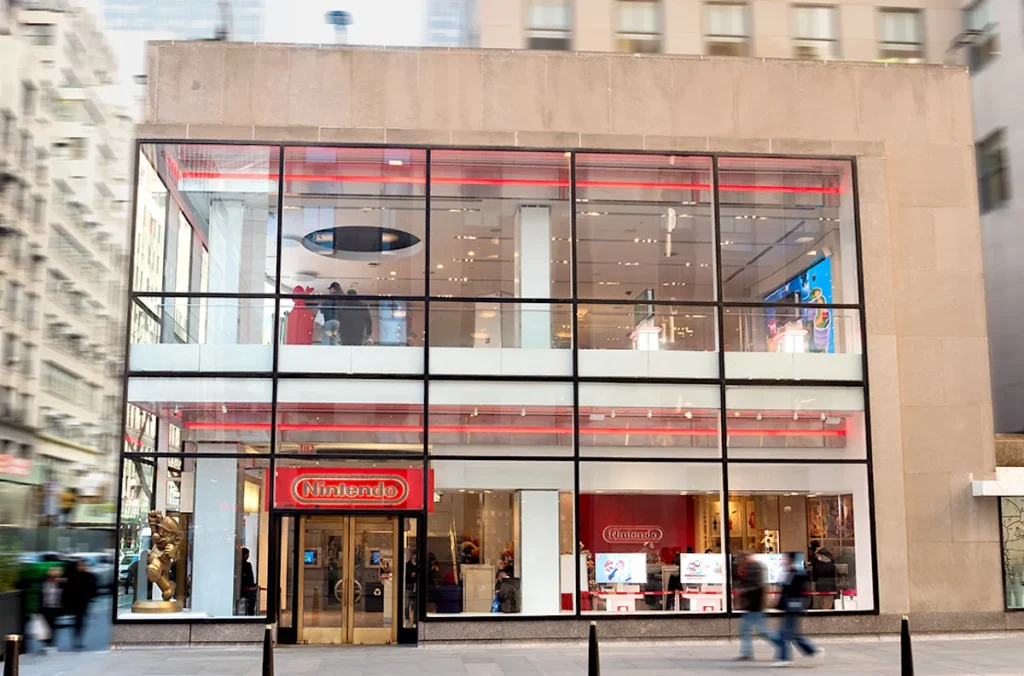
Nintendo’s flagship U.S. store is Nintendo NEW YORK at 10 Rockefeller Plaza, New York, NY 10020. The provided source lists general store hours as Monday through Saturday, 10:00 AM–8:00 PM, and Sunday, 11:00 AM–7:00 PM. Customers can review store details through the official Nintendo NEW YORK page and the broader retail locations page.
Store operations, events, and seasonal traffic can still affect the customer experience, so it is smart to confirm local details before making a special trip for a return, exchange, or pickup question.
Practical Tips Based on Common Retail Practices
- ✓Keep every insert, cable, sleeve, and inner cardboard piece until you are sure the item will not be returned.
- ✓Save digital order confirmations and screenshots because Nintendo-related purchases often depend on account records and proof of purchase.
- ✓Take photos before mailing back a return so you can show the condition, completeness, and packaging used at the time of shipment.
- ✓Double-check whether your purchase is physical, digital, final sale, or warranty-only before opening it.
- ✓For gift purchases, do not assume a holiday extension exists unless Nintendo has posted one for the current season.
Reasons a Return May Be Denied
- ✕The item arrives after the 30-day return period.
- ✕Original packaging, accessories, inserts, or serial-match elements are missing.
- ✕The product shows customer-caused damage, misuse, or signs of heavy handling.
- ✕The purchase falls into a final-sale, digital, hygiene, or other restricted category.
- ✕The return conflicts with policy rules on opened items, missing receipt requirements, or store-location limits.
Return Denial Prevention Tips
- ✓Keep the item in original condition until you decide whether you are keeping it.
- ✓Save the sales receipt, order email, and any order-number confirmations in one folder.
- ✓Start the return quickly so shipping time does not push you outside the allowed window.
- ✓Photograph the product and package before mailing in case condition is disputed later.
- ✓Use tracked shipping and follow any return authorization or support instructions closely.
Edge Case Scenarios
Lost receipt: Store returns are harder without the original receipt, especially at Nintendo retail locations where the stated rule requires it. If the purchase was direct and account-linked, support may still be able to locate some order details. Documentation that helps includes card details, order emails, account history, and the product serial number.
Opened items: Opened items are where many Nintendo return disputes begin. If the item is simply unwanted, return rights may narrow sharply. If the item is defective, warranty support may be the stronger route. Keep photos, packaging, and a clear defect description.
Gift returns: Gift recipients can face extra friction if they do not have the receipt or if the gift was purchased near the edge of the return window. The best supporting documents are the gift receipt, order confirmation, and packaging.
Damaged or defective items: When a product arrives damaged or develops a genuine defect, customers should contact support quickly. That can affect whether the case is treated as a return, an exchange, or a warranty matter.
Late returns: Once the 30-day period passes, a standard refund becomes much less likely. If the issue is functional rather than preference-based, warranty rights may still matter.
Warranty replacement vs refund: For opened hardware with a verified defect, Nintendo may route the customer toward repair or replacement rather than a refund. The better your proof of purchase and defect evidence, the smoother that path tends to be.
Official Policy Source
- ✓Official return policy overview
- ✓Official My Nintendo Store return policy
- ✓Official Nintendo retail locations return policy
- ✓Official repair and warranty service page
- ✓Official order support and cancellation resource
- ✓Official Nintendo NEW YORK page
- ✓Official contact and support page
Social Media Channels
Instagram: @NintendoAmerica
Facebook: Nintendo of America Official
TikTok: @Nintendo
LinkedIn: Nintendo of America
Frequently Asked Questions
Can I return a Nintendo game after opening it?
That depends on whether the game is physical or digital. Digital purchases are generally treated as final sale. Opened physical products are also harder to return because Nintendo places heavy weight on original condition. If the issue is a defect, warranty or support may be the better path.
How long do I have to return a My Nintendo Store order?
For eligible physical products purchased directly from the My Nintendo Store, the return window is 30 days after delivery. That makes the delivery date important. Waiting too long to inspect the item can reduce your options, especially if you also need time to ship the return back.
Does Nintendo refund shipping charges?
Nintendo generally does not refund the shipping cost unless the return is due to Nintendo sending a damaged, defective, or incorrect product. For preference-based returns, customers should expect to carry more of the shipping burden than they might with some larger mass-market retailers.
Can I cancel a Nintendo order right after placing it?
Nintendo’s order-processing system is described as very fast, with little to no grace period. That means even a quick mistake may not be stoppable once the order enters fulfillment. If the order cannot be canceled, the next step is usually to wait for delivery and follow the return process.
What if my Nintendo console is defective after I open it?
An opened defective console often shifts from return territory into warranty territory. The provided source states Nintendo hardware carries a 12-month limited warranty focused on defects in materials and workmanship. Keep your receipt, serial number, and defect details ready before contacting support.
Can I return Nintendo items to the Nintendo store if I bought them online?
Not in the simple way many shoppers expect. The provided source states that My Nintendo Store returns must be mailed back and that Nintendo retail location purchases must be returned to the store where they were bought. Online and in-store channels follow different operational paths.
What should I avoid doing if I want a Nintendo refund?
Avoid opening or discarding packaging too early, avoid losing the receipt, and avoid waiting near the end of the return window. Also avoid filing a bank chargeback before trying Nintendo support first, because account-related consequences can be much more severe than customers expect.
Key Takeaways
- ✓Physical My Nintendo Store purchases generally have a 30-day return window after delivery, while Nintendo retail location purchases generally have a 30-day window from the original purchase date.
- ✓Digital purchases are far less flexible and are commonly treated as final sale, so buyers should confirm the purchase carefully before checkout.
- ✓Opened products, missing packaging, missing accessories, and serial or receipt issues can make refunds or exchanges much harder.
- ✓For defective opened hardware, the stronger remedy is often warranty support rather than a standard return request.
- ✓Shipping and timing matter: standard shipping is free at $50 or more, smaller orders may incur about $5.99 or more, and refund posting can take inspection time plus 5 to 10 days for bank processing.

