


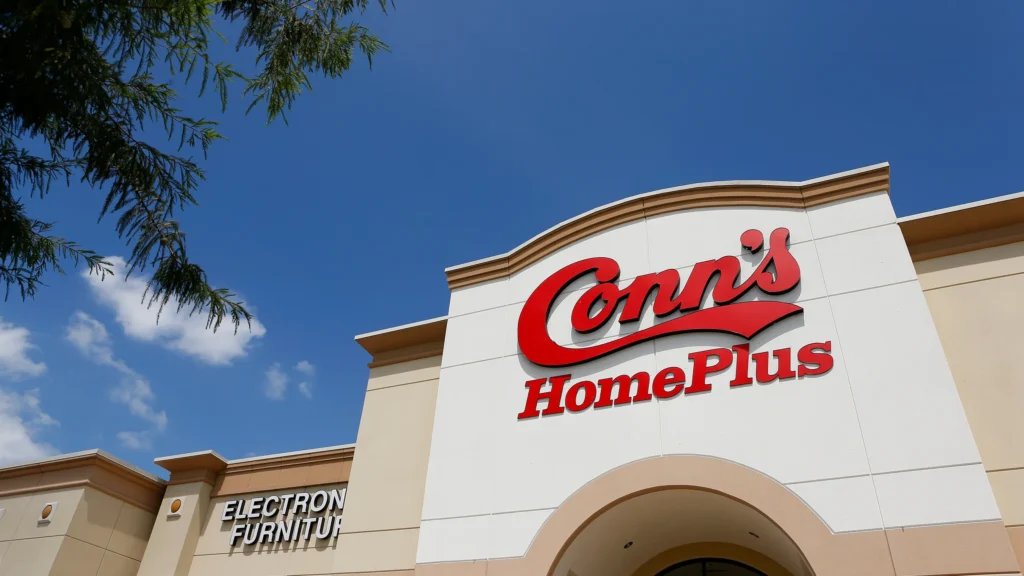
Conn’s is not a typical retail return-policy case anymore. For many shoppers, the biggest questions now are whether a purchase can still be returned, how refunds are handled after store closures, what happens to protection plans, and which support channels still work. This guide is designed for U.S. consumers trying to make practical decisions about a past Conn’s purchase, an unresolved refund, a financing account, or a warranty issue tied to furniture, appliances, electronics, or related protection products.
Because Conn’s moved from normal retail operations into liquidation and wind-down, the rules are more restrictive than shoppers may expect. This Conn’s return policy guide explains the historical 30-day structure, the shift to all-sales-final liquidation terms, refund and exchange realities, warranty pathways, customer service contacts, payment cutoffs, delivery fees, and the steps consumers can still take when a product or account issue remains unresolved.
Quick Answer: Can You Return Items to Conn’s?
Historically, Conn’s used a 30-day satisfaction window for many appliances and electronics, but liquidation sales replaced that with an All Sales Final rule. That means current return options are extremely limited. Where returns were accepted under earlier rules, consumers could also face a 15% restocking fee. If your issue involves a protection plan, financing, or a product defect, warranty or administrator channels may be more realistic than a standard retail return.
Quick Facts Table
| Policy Area | Details |
|---|---|
| Refund Window | 30 days for many appliances and electronics under the historical satisfaction model; liquidation sales shifted to All Sales Final. |
| Receipt Requirement | Proof of purchase strongly recommended; account lookup may require the Account Number and the last 4 digits of SSN. |
| Refund Method | Cash and check purchases were typically refunded by corporate check; credit and debit purchases were generally refunded to the original card. |
| Exchanges Allowed | Historically possible in some cases, but exchanges effectively disappeared once liquidation began. |
| Restocking Fees | 15% historically applied on certain accepted returns. |
| Online vs In-Store Differences | Mail return shipping was generally paid by the customer; many locations reportedly would not accept some online-purchase returns in store during the final phase. |
Policy Snapshot
Return window: 30 days on many qualifying items under the historical policy; liquidation changed that to all sales final.
Receipt requirement: Proof of purchase helps, but financing/account records may also be used for lookup.
Refund method: Corporate check for cash/check purchases; original card credit for card purchases.
Exchanges: Limited historically; effectively unavailable once liquidation started.
Restocking fees: 15% could apply on accepted returns.
Official Return Policy Overview
Conn’s historically gave many shoppers a 30-day satisfaction window on major appliances and electronics, but the later liquidation phase replaced normal return flexibility with all-sales-final rules. That makes current return outcomes much narrower and often pushes consumers toward warranty, chargeback, financing, or administrator channels instead of a standard retail refund.
The most important distinction is between the older Conn’s retail model and the later wind-down environment. Under the earlier structure, a qualifying customer could often return an item within 30 days if the product remained in like-new condition. In practice, that usually meant the item needed to be complete, presentable, and not obviously damaged or heavily used.
Condition and packaging still matter in any dispute. For higher-value goods such as appliances, electronics, and furniture, consumers should assume that original accessories, manuals, remotes, cables, inserts, and model-identifying labels strengthen the claim. Missing components create friction quickly, especially when a return is being evaluated after delivery or after installation.
Conn’s also had category-specific pain points. Electronics commonly bring questions about opened packaging, missing seals, or activation status. Furniture and appliances often raise issues about delivery condition, setup, or visible wear after in-home use. Those product differences matter because one damaged cord, one missing shelf, or one removed manufacturer seal can change the outcome from refund to denial.
Historically, shoppers also had to watch for cost deductions. A 15% restocking fee could apply on accepted returns. If a return needed shipping rather than store handling, the customer generally bore the mail return cost. Policies are subject to change; we recommend verifying directly with the retailer.
Holiday Return Policy
Conn’s historically used an extended holiday return concept for some year-end purchases, but that extension did not function normally during liquidation. For consumers reviewing older purchases, holiday timing should not be assumed. For current guidance, shoppers should treat special holiday windows as uncertain unless they can verify them directly through an official Conn’s channel.
Holiday return extensions were once part of the retailer’s seasonal customer-service approach, especially for items bought during the late-year gift period. The problem is that liquidation interrupted that pattern. Once inventory moved under final-sale conditions, the practical value of any seasonal extension dropped sharply.
That matters most for shoppers who bought during a transition period and expected the standard seasonal cushion. A customer might reasonably think a gift item had extra time, only to find that the return system, store operations, or approval process no longer resembled a normal retail environment.
If your purchase falls around a holiday period, verify whether your transaction happened before or during final-sale liquidation. That distinction is more important than the holiday calendar itself.
Exceptions to the Conn’s Return Policy
- ✕Liquidation purchases: Items sold during the final liquidation phase were generally treated as All Sales Final, leaving no normal return right.
- ✕Opened or altered electronics: Removed seals or signs of customer-caused issues can make return or service approval much harder.
- ✕Incomplete returns: Missing manuals, cables, accessories, shelves, or other original components can reduce refund chances or trigger rejection.
- ✕Gift cards: Gift card treatment became more complicated during the wind-down and may not follow ordinary retail expectations.
- ✕Online-return complications: Even when returns were theoretically possible, store acceptance of some online purchases could be inconsistent.
These exceptions exist because high-value home goods create larger fraud, logistics, and condition-verification risks than small retail items. When a standard return is not available, the better path may be a manufacturer warranty claim, an Assurant protection-plan claim, or account-level support.
Warranty Coverage Explained
Warranty help depends on the type of coverage you have. Manufacturer defects are generally directed to the product brand, while Conn’s-linked protection products such as the Repair Service Agreement, FurnitureGard, and related coverage have been routed through Assurant. For many consumers, warranty service is more realistic than a return.
The first distinction is between the manufacturer warranty and retailer-linked extended coverage. If your issue is a factory defect, the product brand may be your main path. That can apply to appliances, televisions, and electronics where the manufacturer still honors the original defect coverage.
If you bought extra protection, the key plans mentioned in available Conn’s material include the Repair Service Agreement (RSA), FurnitureGard, and Food Loss Claim support. Those channels are tied to Assurant rather than an open Conn’s store counter. The warranty number commonly cited for that path is 1-800-316-2993.
Consumers should gather the purchase record, account number, product details, photos of the issue, and any contract paperwork before calling. Repair versus replacement will depend on the applicable plan terms, the product type, and whether the issue looks like a covered defect instead of accident, misuse, wear, or missing parts.
Step-by-Step Return Process
In-Store Returns
- ✓Bring the item, proof of purchase, delivery paperwork, and any accessories or manuals you still have.
- ✓If the purchase was financed, keep your account number available because account lookup may be more useful than a paper receipt.
- ✓Ask whether your transaction occurred before or during final-sale liquidation, because that timing can determine whether a return is even considered.
- ✓If a return is refused, ask whether your issue should be redirected to Assurant, the manufacturer, or financing support.
Because the store network has been closed, this section mainly applies to older transactions and legacy guidance rather than a current walk-in process.
Online / Mail Returns
- ✓Start by locating your order or financing record through the account tools connected to Conn’s billing and payment channels.
- ✓Use secure packaging, remove old shipping labels, and protect fragile electronics or appliance components before any shipment.
- ✓Expect the customer to bear the shipping cost in the rare case a mail return is feasible.
- ✓Track the package and keep photos of the boxed item, because proof of condition and proof of delivery can matter in later disputes.
- ✓Do not expect a fast refund timeline. In the disrupted environment, refund handling has been far less predictable than ordinary retail processing.
Refund Methods by Payment Type
Conn’s historically tied refunds to the original tender type: card payments usually went back to the original card, while cash and check purchases were typically handled by corporate check. In the wind-down environment, timing has been much less predictable, so the refund method may be clearer than the refund speed.
For credit cards, the normal expectation was a reversal to the original card. Debit-card transactions generally followed the same pattern. Posting speed can still depend on the card issuer, but the bigger problem in the Conn’s context has been operational delay rather than standard bank lag.
For cash and check purchases, refunds were typically sent by corporate check rather than handed back instantly in store. That detail matters because mailed check refunds can feel slow even in a normal retail environment.
Shoppers using financing or promotional plans should separate a merchandise refund from the status of the credit account. A product issue does not automatically erase financing obligations, and consumers should review account activity carefully until the matter is formally resolved.
Conn’s also disclosed a $2.25 processing fee for one-time remote electronic payments, and that fee was described as non-refundable. That is not a merchandise return fee, but it can still affect the total account cost consumers see when managing an ongoing balance.
In-Store vs Mail Return Comparison
| Factor | In-Store Return | Mail Return |
|---|---|---|
| Speed | Historically faster when available | Slower because shipping, intake, and verification add steps |
| Refund Timeline | Usually clearer in a normal retail setting | Less predictable, especially during wind-down |
| Fees / Shipping Responsibility | No shipping charge if accepted in store | Customer generally pays the return shipping cost |
| Convenience | Better for immediate review and documentation | Useful only when store handling is not available |
| Best For | Bulky items, disputes about condition, and situations needing direct review | Rare cases where shipping is the only workable path |
Cancellation Policy
Conn’s historically allowed order cancellation only during a short pre-delivery window, usually before the item left the regional distribution center. In the current environment, “cancellation” more often refers to protection-plan or insurance cancellation rather than canceling a standard retail order after stores have closed.
That distinction matters because many consumers use the word “cancel” when they really mean one of three different things: stopping delivery before shipment, canceling credit insurance, or ending an add-on plan. Those do not always follow the same rule set.
For credit-insurance cancellation, the available guidance points to submitting a completed request and proof of homeowners or renters insurance to connsinsurance@conns.com. If the request is made more than 30 days after purchase, any insurance premium refund may be prorated and credited back to the account instead of paid in cash.
If an item has already shipped, consumers should expect the matter to be treated more like a return or dispute than a clean cancellation.
Shipping Policy
Conn’s promoted next-day delivery in much of its historical service area, but delivery costs and services were not uniform. A cited standard delivery charge was $49.99 for locations more than 76 miles from a distribution center, while white-glove benefits depended on qualifying purchases.
Conn’s delivery model focused on major home goods, which is why shipping policy can be as important as return policy. Appliances and furniture often involve scheduling, carrier coordination, installation, haul-away, and condition checks at the home. Those steps create more room for delays, damage claims, and confusion over who is responsible for what.
Historically, the company promoted next-day delivery across much of its footprint. For some customers farther from a distribution center, the standard delivery fee was $49.99 when the address was more than 76 miles away. White-glove service could include installation and haul-away, but only on qualifying purchases.
On the payment side, the official remote-payment terms state that the cutoff for current-day payment processing is 6:30 PM Central on a business day. Payments made after that time, or on weekends or banking holidays, are processed the following business day. That does not change delivery timing directly, but it does matter for customers managing active accounts.
For returns, the key shipping rule is straightforward: where a mail return was feasible, the consumer generally paid the shipping cost.
Customer Service & Contact Information
The most useful Conn’s support contacts now are account, payment, financing, and warranty channels rather than a traditional store-level returns desk. Main customer support is commonly listed at 1-877-358-1252, with availability shown as Mon–Sat 8am–8pm and Sun 10am–6pm Central Time. Billing and financing support is listed at 1-800-511-5750. Warranty and protection-plan claims are commonly routed to Assurant at 1-800-316-2993.
Lease-to-own customers tied to Improvemint Financial are directed to 1-833-663-7168. The official Conn’s payment and account portals remain central for consumers who need to review balances, make payments, or look up account details.
Quick Connect Support Table
| Support Type | Contact Method | Availability and & Customer Support Hours |
|---|---|---|
| Main Support | 1-877-358-1252 | Mon–Sat 8am–8pm; Sun 10am–6pm (CT) |
| Billing & Financing | 1-800-511-5750 | Best for installment contract disputes |
| Warranty / Protection Plans | 1-800-316-2993 | 24/7 automated; agents during business hours |
| Corporate HQ | 936-271-1588 | The Woodlands / Spring, Texas administration |
| Lease-to-Own | 1-833-663-7168 | For Improvemint Financial accounts |
Store Hours / Store Timings
Historically, Conn’s stores were generally open Monday through Saturday from 10:00 AM to 9:30 PM and Sunday from 10:00 AM to 8:00 PM. That said, the bigger current point is that the retail footprint has been closed, so these hours are no longer a practical in-store shopping or return guide. Consumers should focus on phone, payment-portal, warranty, and account-support channels instead of expecting active showroom service.
Practical Tips Based on Common Retail Practices
- ✓Keep the original box, inserts, manuals, remotes, cables, shelves, and tags as long as your return or warranty window may still matter.
- ✓Save digital receipts, financing contracts, delivery confirmations, and screenshots of account activity in one folder.
- ✓Photograph high-value items when delivered and again before any return shipment to protect yourself in condition disputes.
- ✓For electronics, avoid removing seals or discarding serial-number information until you know the item works properly.
- ✓If you have an RSA or other protection plan, contact the administrator early instead of assuming the closed retailer will handle the issue.
Reasons a Return May Be Denied
- ✕The purchase was made during a final-sale liquidation period.
- ✕The return request falls outside the historical 30-day window.
- ✕Important accessories, packaging parts, or documentation are missing.
- ✕The product shows customer-caused damage, misuse, or removed security seals.
- ✕The issue belongs under manufacturer or protection-plan coverage rather than a merchant return.
Return Denial Prevention Tips
- ✓Act quickly and do not assume an exception will be granted later.
- ✓Use tracked shipping if any return shipment is authorized.
- ✓Document serial numbers, model numbers, and visible condition before surrendering the item.
- ✓Keep a written log of who you contacted, when you called, and what you were told.
- ✓Separate the product problem from the financing issue so one does not get overlooked while you are solving the other.
Edge Case Scenarios
Lost receipt: Try account lookup first. Financing records, delivery records, and account identifiers may help more than a paper slip. Keep your account number and the last four digits of your SSN available.
Opened items: Opened electronics are riskier, especially where seals are removed or the product shows setup activity. Documentation helps, but the claim may shift toward warranty instead of refund.
Gift returns: Gift-related returns can be harder because original payment details may not be available. If the item came during a final-sale period, options may be especially limited.
Damaged or defective items: Take photos immediately and decide whether the better route is manufacturer support, Assurant, or account-level escalation.
Late returns: A late return request is far more likely to fail, particularly in a post-closure environment. At that point, warranty or dispute documentation becomes more important than return language.
Warranty replacement vs refund: Where protection coverage exists, repair or replacement may be more realistic than cash recovery.
Official Policy Source
- ✓Conn’s remote payment terms and conditions
- ✓Conn’s payment portal
- ✓Conn’s bill pay portal
- ✓Conn’s official website
Policies are subject to change; we recommend verifying directly with the retailer.
Social Media Channels
Facebook: ConnsHomePlus
Instagram: @connshomeplus
TikTok: connshomeplus
LinkedIn: Conn’s HomePlus
Frequently Asked Questions
What was the standard Conn’s return window?
For many appliances and electronics, Conn’s historically used a 30-day satisfaction window. That older structure matters for legacy purchases, but it does not mean every later transaction qualifies now, especially where the sale happened during final-sale liquidation conditions.
Are Conn’s purchases now all sales final?
Liquidation-phase purchases were generally treated as all sales final. That makes a big difference from the older 30-day framework. If your item was bought during the wind-down, assume return rights are limited unless a separate warranty, administrator plan, or formal exception clearly applies.
Who handles Conn’s protection-plan claims now?
Available policy material points many protection-plan claims to Assurant rather than an active Conn’s store. That includes RSA-related support and certain related coverage products. For a defect issue, also consider whether the manufacturer warranty is the better route.
How long do Conn’s refunds take?
Historically, refund timing depended on the original payment method, but later processing became much less predictable. Card refunds were generally routed back to the original card, while cash and check purchases were typically handled by corporate check, often with longer wait times.
Can you still make payments on a Conn’s account?
Yes, Conn’s-linked payment portals have remained an important channel for reviewing account information and making payments. Consumers with active financing should monitor the account closely, document every interaction, and pay attention to cutoff times and any non-refundable remote payment fees.
Are any Conn’s stores still open?
The available material indicates the physical store footprint was closed. That means shoppers should not rely on showroom returns or walk-in support as their primary plan. Phone support, bill-pay tools, financing contacts, administrators, and manufacturers are the more practical channels.
Key Takeaways
- ✓Conn’s historically used a 30-day return window for many appliances and electronics, but liquidation shifted purchases to all-sales-final treatment.
- ✓A 15% restocking fee could apply on accepted returns, and mail-return shipping was generally the customer’s responsibility.
- ✓Warranty help is more likely to flow through the manufacturer or Assurant than through a traditional Conn’s store return counter.
- ✓The official payment terms list a 6:30 PM Central cutoff for same-day processing and a $2.25 fee for one-time remote electronic payments.
- ✓Support still centers on account, billing, lease-to-own, and warranty channels, with store-based help no longer the main path.